 Smart Home HVAC Technology Trends That Are Currently Driving Up Residential Property Values
Introduction
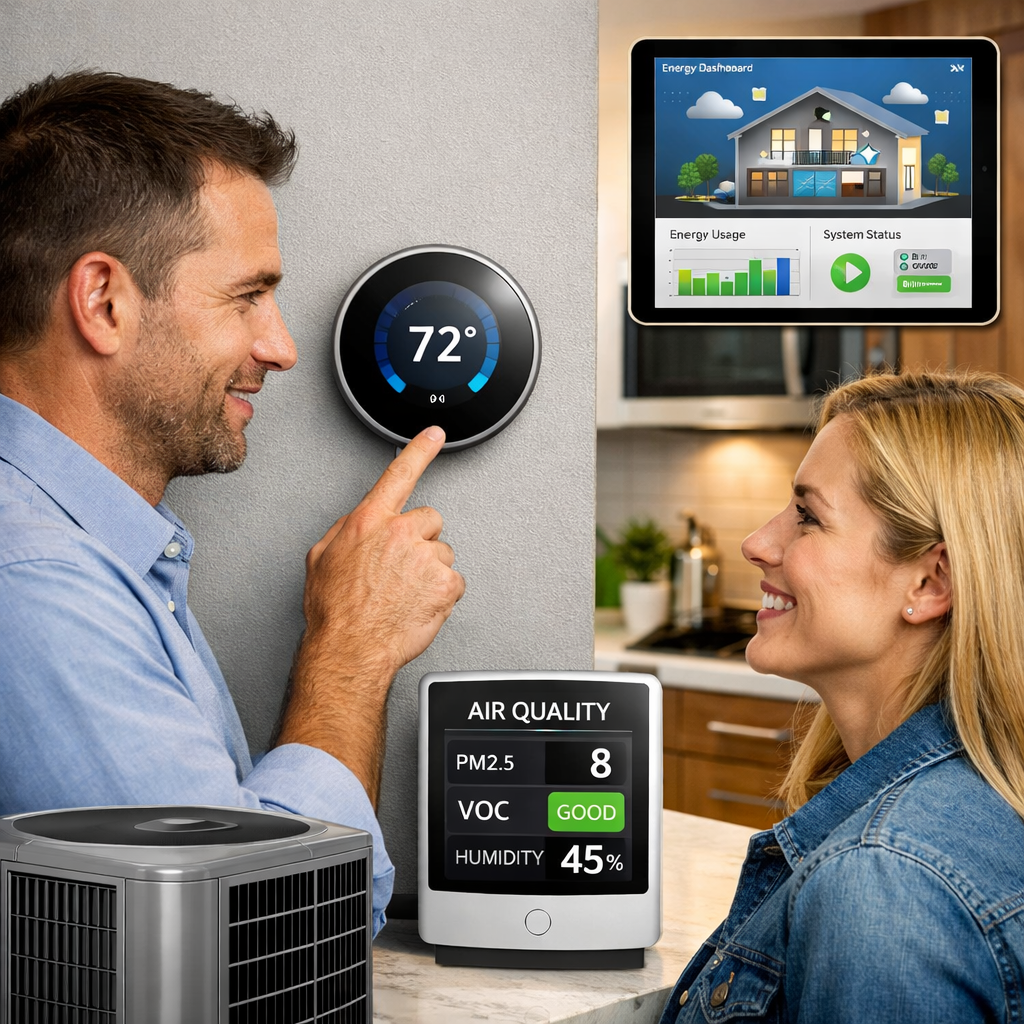
Walk into almost any newly listed home today, and you will notice something that was rare just a few years ago: a sleek thermostat panel, a quiet whir of a variable speed system, or an air quality dashboard glowing on a kitchen counter. Heating and cooling used to be the least glamorous part of a home sale. It sat in the background, only noticed when it broke down. That is no longer true.
In 2026, smart HVAC technology has become one of the clearest signals of a well maintained, forward thinking property. Buyers are not just asking whether a home is warm in winter and cool in summer. They are asking whether the systems inside the walls are efficient, connected, and built to last. Real estate data increasingly shows that homes with integrated smart climate control and modern air quality features sell faster and often command a noticeably higher price than comparable homes without them.
This shift is not a passing fad tied to gadgets and apps. It reflects real changes in energy costs, environmental awareness, and the way appraisers and lenders think about the "effective age" of a home's mechanical systems. In this article, we will break down the specific HVAC innovations that are reshaping property values right now, why buyers are willing to pay more for them, and what homeowners can do to capture that added value.
1. Smart Thermostats and AI-Driven Climate Control
The smart thermostat is the entry point into this entire trend, and it remains one of the highest return investments a homeowner can make. Instead of a simple dial or digital display, today's thermostats learn a household's schedule, track outdoor weather patterns, and adjust heating and cooling automatically to avoid wasted energy. Many models now build detailed comfort profiles for different rooms rather than treating the whole house as one temperature zone.
What makes this technology so appealing to buyers is the combination of convenience and measurable savings. A thermostat that can shift a home's climate before anyone even walks through the door, using phone location data or simple scheduling, feels like a small luxury. But it also translates into lower utility bills, which buyers increasingly scrutinize alongside the mortgage payment itself. Homes advertised with a modern thermostat system tend to draw more interest during showings, and appraisers are beginning to factor in these upgrades when comparing similar properties.
Geofencing, remote app control, and predictive heating and cooling are quickly becoming baseline expectations rather than premium extras. A house without any smart climate control now risks feeling outdated to a buyer who has grown used to controlling their environment from a phone.
2. Indoor Air Quality Systems and Whole Home Filtration
If the thermostat was the first wave of smart HVAC adoption, indoor air quality is the second, and it may end up being the more valuable one. Homeowners have become far more conscious of what they are breathing indoors, and that awareness has translated directly into purchasing decisions.
Modern systems now include built-in filtration that can capture fine particles, allergens, and volatile organic compounds, along with sensors that continuously monitor air conditions and adjust ventilation automatically. Instead of a homeowner manually changing a filter and hoping for the best, the system detects when air quality dips and responds in real time, whether that means increasing filtration after cooking or adjusting humidity to reduce the risk of mold growth.
This matters enormously for resale. A home that feels crisp, dry, and free of musty odors during a walkthrough creates an immediate emotional reaction in a potential buyer, and that reaction often translates into a stronger offer. Families with allergies, older buyers concerned about respiratory health, and simply anyone who has become more attentive to wellness at home are actively seeking these features. Properties that pair strong filtration with humidity management are increasingly marketed as healthier places to live, and buyers are responding with real dollars.
For homeowners in older properties without central filtration upgrades, professional maintenance still matters. Even the smartest system depends on clean ductwork to perform well, which is why services like air duct cleaning salt lake city have become part of routine home preparation before a sale, ensuring that new filtration technology is not working against years of accumulated dust and debris.
3. High Efficiency Heat Pumps and Variable Speed Systems
Energy efficiency has moved from a nice to have feature to a core expectation, driven by rising utility costs and tightening efficiency standards. Heat pumps, particularly cold climate models that can maintain full heating capacity even in freezing temperatures, are seeing a sharp rise in residential adoption. These systems use electricity far more efficiently than traditional furnaces and are increasingly competitive with gas heating even in colder regions.
Variable speed motors are another quiet but significant upgrade reshaping buyer expectations. Older HVAC equipment tends to operate in a blunt on or off pattern, blasting cold or hot air until the thermostat is satisfied. Variable speed systems ramp up and down gradually, which results in quieter operation, more consistent temperatures, and noticeably better humidity control throughout the year. Buyers touring a home during an open house may not know the technical name for this technology, but they absolutely notice the difference in comfort, and that impression carries weight when it comes time to make an offer.
Because these systems tend to have longer lifespans and lower operating costs, appraisers are more willing to adjust a home's value upward when a modern, high efficiency system replaces an aging unit nearing the end of its quarter century lifespan. Buyers are also increasingly aware of available tax credits and rebates tied to high efficiency equipment, which sweetens the deal further and makes the upgrade easier to justify financially for sellers.
4. Predictive Maintenance and Connected Diagnostics
The final major trend reshaping the residential HVAC landscape is the shift from reactive repairs to predictive maintenance. Newer systems are equipped with sensors that monitor performance patterns, vibration, and even subtle acoustic signatures that can indicate a component is beginning to fail. Instead of a homeowner discovering a broken system in the middle of a heat wave, the system itself can alert them, or their service provider, well before a full breakdown occurs.
For buyers, this represents peace of mind that is difficult to overstate. An outdated HVAC system without any diagnostic capability is a hidden risk, one that savvy buyers increasingly try to price into their offer through negotiation. A connected system with a documented maintenance history and predictive alerts removes much of that uncertainty. It signals that a home is genuinely ready, not just cosmetically updated.
This technology also extends equipment lifespan by catching small issues before they become expensive failures, which protects the long term value of the investment for both current owners and future buyers. As more manufacturers build this kind of intelligence directly into standard equipment, homes without it may start to look neglected by comparison, even if the underlying system still technically works.
Conclusion
Smart HVAC technology is no longer a novelty reserved for luxury properties. It has become a meaningful driver of everyday home value, influencing how quickly a house sells and how much buyers are willing to pay for it. Smart thermostats offer convenience and savings that buyers notice immediately. Indoor air quality systems appeal to a growing focus on health and wellness. High efficiency heat pumps and variable speed equipment deliver comfort and long term savings that appraisers are learning to recognize. Predictive maintenance removes the uncertainty that once made HVAC one of the most feared line items in a home inspection.
For homeowners thinking about selling in the near future, or simply looking to protect their investment over time, these upgrades are worth serious consideration. Even smaller steps, like scheduling regular duct maintenance or replacing an outdated thermostat, can make a noticeable difference in how a home is perceived by today's increasingly tech savvy buyers.
Blog by : Sara M